


Industrial equipment stability, service life, and assembly accuracy all rely heavily on the quality of core structural cast components. Many manufacturing enterprises blindly pursue low procurement costs while ignoring material density, dimensional tolerance, surface flatness, and internal structure uniformity of cast parts. These hidden defects frequently lead to frequent equipment failures, shortened maintenance cycles, increased assembly waste, and unexpected production shutdown losses that cannot be easily detected in daily inspections. Choosing reliable aluminum alloy die casting components effectively avoids most long-term operational risks and optimizes overall production cost structure comprehensively.
Most buyers only focus on appearance size and unit price when selecting die cast parts, failing to judge internal porosity, shrinkage cavities, thermal deformation resistance, and pressure resistance performance. Unqualified die cast aluminum parts are prone to air leakage, cracking, wear failure and loose structure after high-temperature operation and long-term load operation. Such problems often occur after mass assembly and batch application, bringing huge after-sales repair costs and delayed delivery risks to the entire production line. Professional customized die casting solutions from professional aluminum die casting manufacturer strictly control every metallurgical molding link to eliminate inherent quality hazards from the source.
Dimensional accuracy deviation is the most overlooked deep-seated problem in industrial die casting applications. Ordinary sand casting and rough die casting processes cannot control micron-level tolerance, resulting in poor matching during equipment assembly, repeated grinding modification, reduced overall tightness of finished products, and unstable power transmission performance. Precision aluminum die casting adopts integrated high-pressure molding technology, which ensures consistent size accuracy of mass-produced parts, reduces manual finishing procedures, and greatly improves assembly efficiency and product qualification rate.
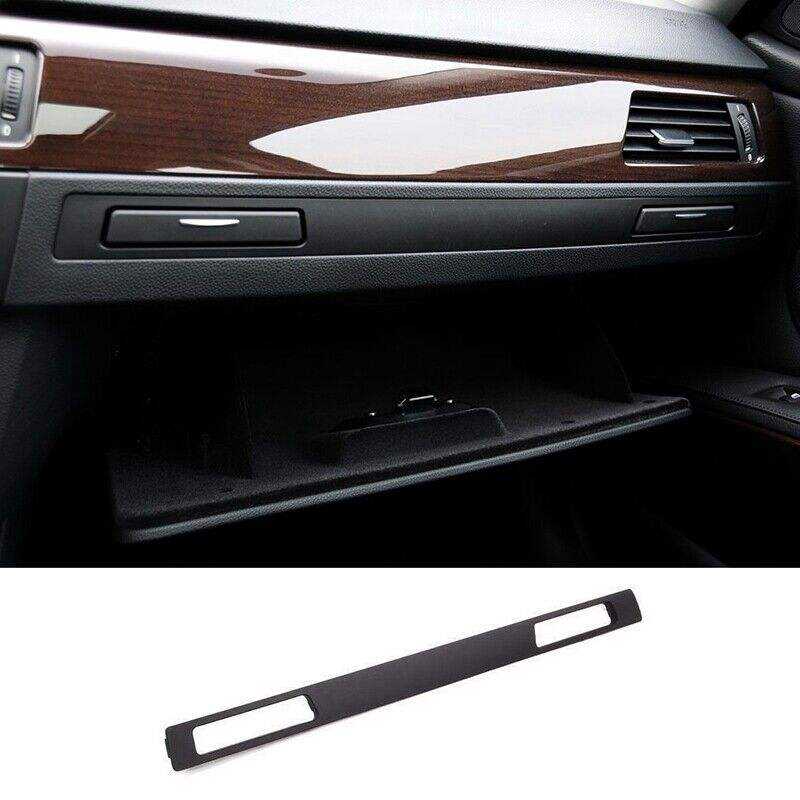
Corrosion resistance and lightweight performance determine the application scope and durability of aluminum cast parts in automotive, automation machinery, communication equipment and power machinery fields. Low-purity aluminum materials have weak oxidation resistance and poor structural toughness, which accelerate aging deformation in humid, oily and high-vibration working environments. High-quality die-cast aluminum alloy integrates reasonable element ratio, pressure densification molding and surface anti-corrosion treatment, achieving both lightweight structural advantages and long-term environmental adaptability.
Many enterprises misunderstand that all die casting products have identical process performance. In fact, mold precision, molding pressure, cooling speed, post-processing technology and stress relief treatment directly affect the internal stress distribution and service stability of finished castings. Unreasonable process parameters will cause invisible internal stress accumulation, and parts will slowly deform and crack after long-term operation. Standardized mass precision die casting production strictly follows industrial grade testing standards, eliminating stress concentration defects and ensuring stable performance under complex and harsh working conditions.
Performance Comparison Of Standard Aluminum Alloy Die Casting Parts & Conventional Cast Products
| Performance Index | High Precision Die Cast Aluminum Parts | Ordinary Sand Cast & Rough Die Cast Parts | Practical Production Impact |
|---|---|---|---|
| Dimensional Tolerance | ±0.02mm | ±0.1~0.3mm | Reduce assembly gap and matching error |
| Internal Compactness | No obvious porosity & shrinkage cavity | Serious internal pores and loose structure | Avoid air leakage, oil leakage and pressure failure |
| Surface Roughness | Smooth and flat, less secondary processing | Rough surface, many burrs and defects | Save polishing and machining working hours |
| High Temperature Resistance | Stable structure below 220℃ | Easy deformation above 120℃ | Suitable for high-load continuous operation equipment |
| Service Cycle | 3–5 times longer than ordinary castings | Fast wear and frequent replacement | Lower overall annual maintenance cost |
| Load Bearing Stability | Uniform stress distribution | Uneven local stress | Reduce fracture and damage probability of mechanical parts |
Deeply analyzing actual on-site usage scenarios, precision aluminum die cast parts can adapt to automated assembly line mass matching, precision mechanical structure support, sealed pressure system components, and frequent vibration operation environments. Unlike scattered small-batch customized parts, standardized die casting products achieve consistent batch quality, which greatly reduces quality differences between individual parts and avoids production line instability caused by part inconsistency.
Surface treatment compatibility is another core advantage that high-quality aluminum die cast parts possess. They can smoothly adapt anodizing, powder spraying, electroplating, passivation and other multi-process post-treatment, forming durable wear-resistant and anti-rust protective layers. Inferior castings have loose internal tissue, which easily causes coating peeling, bubble generation and uneven color during surface treatment, directly scrapping finished matching products and increasing unnecessary material losses.
From total cost of production cycle, low-priced inferior cast parts are not cost-effective at all. Although initial procurement expenditure is low, frequent replacement, equipment failure shutdown, assembly rework and after-sales maintenance continuously increase hidden costs. Long-term use of qualified precision aluminum alloy die cast components reduces comprehensive comprehensive expenditure, improves equipment operation efficiency, and helps enterprises stabilize product quality competitiveness in fierce market competition.
All finished precision die casting products undergo strict pressure testing, dimensional inspection, hardness detection and appearance flaw screening before delivery. Every batch of products meets industrial mechanical application standards, matching multi-industry customized assembly requirements such as intelligent machinery, automobile accessories, electrical housings and mechanical structural parts. Stable molding quality, reliable material performance and complete dimensional matching make it the preferred core casting accessory for long-term stable industrial production.